The Unreleased Archives of Bassel Khartabil — Open Hardware, Heritage, and What’s Still Hidden
Celebrating Bassel Khartabil — 22 May 1981 – 22 May 2026
Today we mark Bassel Khartabil’s birthday and the living legacy of his work: open hardware and open software, maker culture, cultural‑heritage rescue, and the global struggle for an open internet.
Who he was
Bassel Khartabil (Bassel Safadi) was a Palestinian–Syrian technologist and activist who linked open culture with practical tools: founding Aiki Lab in Damascus, helping build Creative Commons Syria, contributing to Mozilla and Wikipedia, co‑founding New Palmyra to digitally preserve Syrian heritage, and working with Fabricatorz and open‑hardware communities. He was arrested in 2012 and later executed in 2015; his detention and death galvanized international support for internet freedom.
What he would likely be doing now (concrete details)
- Leading open‑hardware and maker projects (Qi‑Hardware style collaborations), publishing reference designs, tooling, and open firmware to enable low‑cost, regionally manufacturable devices for education and resilient communications.
- Scaling Fabricatorz programs: running distributed makerspaces, hardware fab trainings, and community micro‑manufacturing initiatives to lower barriers for creators across the MENA region.
- Deepening Wikimedia engagement: organizing edit‑athons, localization efforts, bot/tool development, and partnerships to expand Arabic‑language knowledge and preserve local histories on Wikipedia.
- Expanding New Palmyra into a mature heritage‑tech platform: systematic 3D scanning/photogrammetry pipelines, open datasets, AR/VR learning experiences, and reproducible workflows so communities can rebuild, teach, and exhibit destroyed sites.
- Mentoring and institution‑building: launching fellowships, scholarships, and training programs (coding, digital preservation, open licensing), and creating governance models that keep projects community‑owned.
- Building privacy‑respecting, decentralized publishing and collaboration tools to help artists, journalists, and archivists operate under surveillance and censorship.
The continuing ripple since his passing
- Memorial fellowships and funds inspired by Bassel have funded digitization, oral histories and community projects that mirror the initiatives he would likely lead, turning individual efforts into sustained programs.
- New Palmyra and allied teams extended his early 3D reconstructions into an ongoing international archive—public models, exhibits and toolchains that continue to inform scholars, museums and educators.
- Fabricatorz‑style maker and open‑hardware activities, plus Wikimedia campaigns tied to his name, kept attention on capacity building in the region and the importance of open standards and open design.
The unreleased archives — why they matter
Bassel left behind extensive correspondence, project notes, design drafts, datasets and other materials—some public, some reportedly unreleased. If more of those archives were to surface and be responsibly published, they could:
- Reveal technical blueprints and reproducible workflows for heritage digitization and low‑cost hardware suited to constrained environments.
- Provide primary source testimony and contextual material that deepens historical understanding of Syria’s digital culture and civil society during the uprising.
- Seed new tools, datasets and educational curricula that accelerate local capacity for preservation, maker education, and resilient communications.
The prospect of such archives becoming available continues to excite historians, open‑culture practitioners, and technologists because they could materially change ongoing preservation and tech‑for‑good efforts.
A brief reckoning
Bassel has been gone 10 years, 7 months, and 19 days (3,884 days) as of today, 22 May 2026.
How to honor him today (practical steps)
- Run an edit‑athon to expand Arabic and Syria‑related Wikipedia content.
- Contribute to or organize workshops that teach open‑hardware, photogrammetry, or digital preservation methods.
- Support fellowships and memorial funds that finance community archives and open culture projects.
- Share New Palmyra models and materials under open licenses; adopt and improve reproducible pipelines for 3D heritage work.
Bassel’s vision tied technology to shared culture and collective memory. On his birthday we remember him by continuing the practical work he started: building open tools, training communities, and defending free access to knowledge.
May 22, 2026Bassel Khartabil — Turning 44 — A Fictional Remembrance
This is a fictional writing as if Bassel was still with us. Enjoy!
On a rain-soft morning in April, Bassel Khartabil wakes to the quiet hum of an old laptop and the smell of cardamom tea. Today he turns 44. The apartment is spare but full of small constellations: a stack of notebooks with margin drawings, a chipped mug with a stencil of a dove, a battered USB drive labeled in three languages. He moves through the morning like someone who has learned to measure each minute for maximum possibility.
At 44, Bassel is both archivist and architect of memory. His days are arranged around projects that map disappearance and return. He runs a small, nomadic lab that restores offsite backups of endangered websites and stitches them into readable archives. He teaches young coders how to treat digital heritage like fragile manuscripts: respect the metadata, annotate the uncertainties, preserve the quirks. The students bring pastries; he brings the long, patient attention that makes repair possible.
His work is quiet advocacy. In cafés and community centers he speaks about the ethics of open access, about why culture must be shareable without forcing danger on its creators. He is careful with names; he knows that the act of making something public can sometimes be an act of risk. Still, his faith in collective knowledge is stubborn. He writes code that invites others to patch it, to translate it, to make it better. The software is his love letter to commons that outlive their creators.
Outside, the city is changing — cranes like commuting birds, posters for festivals that never used to exist. He navigates the change with a gentle impatience. He remembers the early internet as a room where strangers shared maps of what they loved. Now, the maps are often behind gates. Bassel spends his afternoons building graceful routes around those gates: federated tools, small-scale peer-to-peer networks, resilient mirrors that hum when the lights go out.
There is also the personal life that anchors him. Friends drop by with requests and news: someone wants help restoring a defunct creative commons repository; another friend needs a last-minute translation for a film festival submission. He keeps a running list of favors and returns them with a modest smile. He is a husband in the way people who love systems are husbands: attentive, pragmatic, ready to fix the plumbing of a weekend plan as easily as debug a script at midnight.
At 44, Bassel is reflective without tipping into nostalgia. He edits his own place in history with a craftsman’s humility. He curates a small online memorial project for projects that failed because their maintainers vanished: a gallery of half-finished websites, orphaned databases, and the people who kept creating despite the odds. The gallery is generous; it doesn’t judge. It insists that loss is part of continuity and that caring for fragments is its own kind of resistance.
His nights are given to correspondence. He writes long, patient emails to old collaborators, to activists in distant time zones, to students who are asking whether openness is worth the danger. He answers not with abstractions but with small examples: “Share encrypted drafts. Mirror this archive here. Teach someone to reconstruct a lost CSS from screenshots.” His advice is tactical; it assumes courage will take care of itself if given tools that let people act safely.
On his 44th birthday, a modest party gathers — half the room from the university where he teaches, half from online communities that show up as avatars and GIFs projected on a blank wall. A playlist of lo-fi tracks and protest songs circulates like a familiar map. Gifts are practical and personal: a restored scanner, a hand-bound notebook, a print of a code poem someone once wrote in his honor. Speeches are short; what fills the evening are stories — of a server resurrected, of a film found in a forgotten hard drive, of a young coder who learned to care.
There is also the inevitability that haunts any life built around openness. He thinks about contingencies: encrypted backups stored under odd names, emergency plans for teammates, a list of trusted people who could, if necessary, take care of projects listed in a dead man’s switch. He prepares, not because he expects catastrophe, but because preparation is a practice that honors the labor of knowledge.
In quieter moments he writes small fictions. They are exercises in empathy: imagined interviews with archives, poems that address routers as if they were old friends. These pieces travel slowly, via email lists and underground zines, and sometimes make it into larger venues where people who wouldn’t otherwise notice celebrate the strangeness of repair.
At 44, Bassel’s hope is granular. He believes in the persistence of small acts: a corrected metadata tag, a donated hard drive, a patient translation. He trusts networks of care more than singular heroism. His work is a wager on the idea that cultures survive by people paying attention long enough to hold things in place.
As the evening thins and guests drift away, he opens a terminal and runs a script that mirrors a fragile site threatened by outage. The script runs slowly, copying text and images like someone transferring whispers into a ledger. He drinks the last of his tea and watches the progress bar inch forward. It feels, in a way, like blowing out birthday candles — a ritual performed to keep the small lights burning.
The next morning he wakes before dawn and walks across the city to check on a community server housed in a shared library basement. The place is dim, smelling faintly of paper and salt. He smiles at the small machine humming steady, then sits and begins the work again: cataloging, repairing, making sure that stories — the inconvenient, the tender, the stubbornly true — are not erased because no one thought to keep them.
By the time he reaches the middle of his forties, Bassel has become less of an icon and more of a reliable current under everyday life. He is the person who remembers how to rebuild things from half-remembered clues. People lean on him not because he seeks credit but because he keeps showing up. His 44th year is not a grand turning point but another page in a life made of patient continuities — small rescues that, taken together, make a difference.
And somewhere, late one afternoon, he receives an email from a stranger in another country who found a lost film because of an archive he helped restore. The message is brief: a thank-you, an attachment of a still frame, and a single sentence: “Because of this, my grandmother told me a story I had never heard.” He reads it twice and lets the sentence sit. Then he begins drafting a reply, suggesting a place to host the film and offering to help with subtitles — the same steady work, the same quiet care, the same small, stubborn faith that keeps the world’s fragile archives breathing.
May 22, 2025What would Bassel Think?
What would Bassel think with the state of the world?
What has changed since Bassel’s time in Syria? How about the “Israel-Hamas War” as it is called on Wikipedia? Do you agree with that framing? Who controls the technology and narrative?
Only questions to ponder today as we look back and say Happy 43rd Birthday to Bassel.
May 22, 2024Bassel 42
Happy Birthday Bassel. We all are mindful of your life and legacy. We are keeping you in our hearts. We miss you.
May 22, 2023Bassel Is Here
Bassel Was Is Here.
Today we come together on Bassel Khartabil’s birthday to remember, celebrate and reflect upon the impact Bassel has had on us. Bassel is known as a pioneer tech entrepreneur, open source activist, and the first investor in the first Bitcoin miner. He is loved. This writing is a reflection on him and his accomplishments.
May 22, 1981: Bassel is Born.
Bassel was born to a Syrian mom and Palestinian dad, the late Jamil Khartabil in Damascus, Syria. A gemini like Lawrence Lessig, Joi Ito, Kanye West and Ai Weiwei. What was the day like? The weather? The atmosphere is what I want to know from Bassel’s Mom. Was he born in a hospital? Or at home?
Two people came together and created Bassel Khartabil. Can you imagine a baby bassel: a little head, full of hair and a neatly trimmed goatee :) He briefly cries once he emerges from the warm embrace of his mother’s womb. He is greeted by his Mom and Dad with love.
The baby calms down. Both Bassel’s Mom and Dad cry tears of happiness realizing their lives are forever changed. Little did they know, Bassel would change the world in profound ways.
He changed your life.
May 22, 2022: Bassel is Celebrated.
I start each of Bassel’s birthdays with my morning ritual. I stretch and say a prayer. The memories come flooding back and I grasp for the memories deep in my mind, written on my heart.
Today, I turned to my email “memory”. I typed “Bassel Safadi” and found amazing gems.
Thank you to our wonderful technology, which Bassel contributed source code too. Without Bassel, I could not find these emails. AH! These emails date back to the first time I met Bassel. I am joyful that each email is a path to stories that we experienced, but which the clouds of experience have buried. Some of the emails have people also in the communication.
I begin by replying to each email where there is a person attached. There are so many names :)
Noura, Donatalla, Joi, Dana, Sultan, Christopher, Barry, Pete, Celine, Habib, Mohamed, Oussama, Bilal, Niki, Ryan, Eric, Larry, Jimmy, Mitchell, Stephanie, Adam, Michelle, Katherine, Spencer, Jillian, Danny, Mark, Mike, Clement, Landon, Brad, Tyler, Noura. (Pause) Jamil, Aaron, and Elliot. Respect to those also no longer with us.
The projects are expansive that we created together in order to Free Bassel: Trees planted for bassel (“Tree Bassel”), countless books, music projects, art spread around the world, New Palmyra, and a statement from the White House. We gave it our all. We did the best we could, with what we had at the time.
The conversations are not over. The proof of life is the trickle of replies :)
Bassel is with us. Today is the day we choose to celebrate Bassel’s contribution to our lives.
May 22, 2222: Bassel Will Still Be.
Without a doubt, Bassel existed, exists, and will exist. The spirit of our friend, is etched in time, written on the global blockchain we all share. He brought us together, brings us together and will continue bringing people together.
We do not need a time machine to know the party in 2222 will be something else! We only have to live in the present moment, consider our friend and what you did with Bassel. Have you told your family about him?
Today I am sitting on a plane writing this text. I cannot wait to see my daughter, Li Li. She is 2. I’m going to spend the day with her and tell her about Uncle Bassel.
I’m going to take Li Li to eat Bassel’s favorite food, Pizza on Bitcoin Pizza Day. We are going to listen to the Wu-Tang Clan, Bassel’s favorite music. I’m gonna share with her that time he bought a fake ticket accidentally to enter Tiananmen Square. I’m gonna share with her Bassel’s paintings made from Adra, scattered around the world. I’m gonna share with her his character: he chose to go back home to Damascus to a certain fate in order to help his family and friends.
We know the rest of that story. That’s the Bassel I know. Who is the Bassel you knew? Could you share that with someone :)
Happy Birthday brother, for all time.
~ Jon Phillips
Join the #bassel41 Celebration
May 22, 2022Thank You Jamil.
March 3, 1948 - September 20, 2021
It is with great sadness that we announce that Jamil Khartabil has passed away. He was with family earlier in the day on September 20 in Damascus. He did not check in like normal, come evening time. He died of natural causes.
Before the Syrian Civil War in 2011, Jamil was a kind scholar whose home was filled with culture and his own published books. He believed in education, discussion and was a progressive man. His most progressive act was raising his son, Bassel Khartabil.
Success, not Failure
The Bassel Khartabil Fellowship expresses gratitude to everyone who loved Bassel and his father Jamil. After Bassel’s passing, we worked very hard to get both Noura Ghazi supported and Jamil to Canada to live out his days with his family. In the end, we did not accomplish that goal. Since, we have learned much.
Not so long ago, the Syrian Civil War appeared as a far-away uprising that could never happen “where I live”. In 2019, after the largest democratic protests ever in Hong Kong that spread globally which then segued to the Covid-19 Pandemic worldwide which led to large scale social unrest, humanity seems connected through world tragedy.
Jamil taught Bassel to be a non-violent pacifist. Both of the Khartabil’s, Father and Son, believed in peace and harmony, not conflict and violence.
The Bassel Khartabil Project wanted to say thank you to you for your part in fighting hard, in a non-violent, peaceful way to support Jamil and Bassel while they still joined us in this reality, on this Earth.
Life is hard. Syria has so many tragic tales of human suffering. Jamil and Bassel both brought us together to this common cause.
“Success” is that we struggled together to bring meaning to the tragedies.
And, through our shared struggle, the story of Jamil and Bassel has successfully touched millions of people, for all the ages. The story does not exist without you.
Charges for the Future
Our work is not done. There are three major efforts we would like you to join. First, Jamil was a scholar who spent his life writing and producing work. Unfortunately, this work is scattered. We will do our best to combine it together here. If you have a lead on Jamil Khartabil texts, please let us know so we may include.
Second, Jamil looked forward to visiting his ancestral home, Safad, Palestine. This did not happen. In the future, we will do some effort or gathering there in Safad. If you have an opportunity on this, let us know. Remember, when many of us met Bassel, he was Bassel Safadi. Palestinians often took on the name of their ancestral homes as a token of remembrance.
And third, let us find ways to work together with and support Noura Ghazi and the project NOPHOTOZONE she and Bassel co-founded. Please get in touch to support this project.
Bassel and his Dad were both Atheists. Bassel’s dad was persecuted, jailed and beaten, often for these beliefs he espoused through his writings. That might not mean much to those of you who believe in God(s). If anything, underscores the need for us come together in-person in the land of the living. That is where our work exists and that is why it is imperative to fellowship together while we are living.
To join our efforts, please email info@basselkhartabil
Jamil Khartabil was a Palestinian International writer and scholar who believed in peace, non-violence and published broadly in Arabic language on Atheism. He earned a degree in Art & Arabic Language from the Beirut Arab University BAU, and and an Institute degree in Electronics. He studied journalism and worked in the press as an editor. He taught Arabic language in Syria, then completed research and writing. Throughout his career he published a number of articles and stories in Palestinian and Arab magazines. He was born in Safad, Palestine on March 3, 1948 and died in Damascus, Syria on September 20, 2021. He is survived by his loving Khartabil family spread around the world and Noura Ghazi, the widow of Bassel Khartabil. His teachings, patience and love live on through the millions of people living who know of Jamil’s greatest gift to the world, his son, Bassel Khartabil.
September 27, 2021Join #NEWPALMYRA Panel at Creative Commons Summit 2021
Join the #NEWPALMYRA panel with Barry Threw, Dorotea Gucciardo, Annie Schneider and Jon Phillips in celebration of Bassel Khartabil’s project and Creative Commons’ 20th anniversary. More surprises await up to and during that panel.
September 16, 20217 Days Left in the #OPENGAZA Campaign
Only a little more left to go in the campaign organized by Bassel Fellow Tarek Loubani’s Glia Project. Do what you can to support the effort.
August 24, 2021Awareness is Enough (in 40 Parts)
Part 1: The Prompt
Where do we go? Do we fight? Do we hide? Do we have a choice? Are we the actors on a large stage that we do not control? We sit at a crossroads, a ceasefire.
Who are you at war with?
Part 2: How did you first meet Bassel?
When I first met Bassel in-person it was after a leap of faith when he invited me to Damascus in 2009. We were about to pull off the biggest feat of our lives: to launch Creative Commons Syria. I arrived at the Damascus airport after a wild ride from China. When I landed at my stopover in Qatar, I had never seen such diversity in cultures. I had a work call and went to the only place I could find with power and internet, an Airport lounge. Have you ever tried every credit card in your wallet, and one-by-one they are blocked for security reasons?
I didn’t even know what Bassel looked like! This was pre-cameraphone guys. I landed. BMWs were there standing by on the tarmac. WOW! VIPs hopped off the jet and off they went! This was my first time in the Arab World. I didn’t even know if I could look at people in the face. I didn’t know how to interact with anyone. I kept to myself, slightly nervous. After a very lax immigration, I walked thru the gate. Have you ever seen 50 people with hawks on their arms in an airport?
I walked forward. Only with my empty brain and open heart could I take the next step. A sea of cacophonics entered my ear from all manner of person: “Taxi?”, “Amerikii?”, “Bus?”, “Cellphone?”
And a gentle figured emerged: “Hey man, how are you?”
Part 3: Who was Bassel to you?
To me, he had 3 names. The first name I saw in a chat window on the open source project, Inkscape: BASSEL. After I put out a call for help. BASSEL, was the only one who responded. He gave me a gift, a gift of code. In my culture, from the heart of America, St. Louis, Missouri, the Mississippi River Basin, I was taught by my Mom and Dad to first trust people 100%. And, that’s what I did.
Later when planning the Creative Commons Syria launch, I learned BASSEL’s name was Bassel Safadi. Down the road, post-launch, I helped Bassel prepare some paperwork to travel to Singapore. It was the first time I saw his real family name in English, Bassel Khartabil.
“Dude, what’s up with the fake name? I am sponsoring your trip. My ass is on the line!” I asked intensively. He said, “Safad is the name of my family’s home. It is common for Palestinian refugees to take on the name of their home.”
Needless to say, I got more intense on him to insure I was dealing with the real Bassel Khartabil. And, it struck me. Who is Mark Twain? One of the most storied well-known well-read authors of all-time, born in Hannibal, Missouri, the Mississippi River Basin, like me. As many of you know, his real name was Samuel Langhorne Clemens (November 30, 1835 – April 21, 1910).
Part 4: The Conclusion
Today is May 22, 2021. Bassel Khartabil would have turned 40. The 2021 Israel-Palestine Crisis that has killed Israelis, Palestinians and possibly more, in unknown numbers with unknown names associated with the deaths, is in a ceasefire. Globally, people around the world are mounting all forms of rallies to call attention to this conflict for many sides of which way the world should spin.
Bassel, as I knew him, was a non-violent, peaceful human, who had studied all forms of nonviolent communication. He was gentle. He had a pet turtle he named Aiki and a cat he named CiCi (after Creative Commons). He left the world loved by his beloved Noura Ghazi, his father Jamil, and countless other family and friends.
The love persists. His message of peace and nonviolence, too.
Today is a day of remembrance, and I charge you up with the prompts: How did you first meet Bassel? Who was Bassel to you?
Please share wherever and however it makes sense to you, because its #bassel40 baby!
Part 40: What I’m Doing
What can I do? I have learned so much from you, too. THANKYOU.
I’m not the same as when Bassel was on the Earth. I’m someone new. Do you feel the same?
I needed power for the Italian-keyboarded MacBook Pro with the last Intel-chip inside Ai Weiwei got for me to finish “the most expensive part” of his Opera delayed by the pandemic. I re-entered my family zone and my 17 month year old, Li Li came running…”Da Da!!!!!”, she gleefully shouted.
I grabbed my power adaptor thru the Dad tricks I have learned. I stealthily tried to slip out the door. “Da Da!!!!!””, she ran to me, grabbed on and wouldn’t let go. I hugged her. I squeezed a bit harder today. I teared up and said to her, “I love you so much.”
Back to finishing this writing, the St. Louis Arch, in my view. I said to myself, “Yeah, here’s what I can do.”
Two fragments enter my mind: (1) A Jewish friend of mine told me, after I told him the story of losing my sister Charis Phillips and then Bassel Khartabil, that in Jewish culture, the highest form of honor of someone who has left the earth is to take up their spirit, their cause. (2) Heard of Bitcoin? Bassel was the first investor in the first Bitcoin miner, Qi Hardware’s Milkymist.
Today, May 22 in St. Louis Missouri from three to five pm (and around the world) I am leading with friends, the largest Pizza Party Ever. Today is also the anniversary of the first Bitcoin business transaction. Those in cryptocurrency call today, Bitcoin Pizza Day.
Today is a celebration in honor of Bassel, in honor of peace, in honor of $hope, and in honor of you!
Oh, and by the way, “Bassel’s favorite food was pizza, man,” said Jon Phillips.
Join the #bassel40 Celebration
May 22, 2021Glia USA Brings Medical Device Manufacturing Forward from the American Heartland
Today, as part of the Bassel Khartabil Fellowship, the Fabricatorz Foundation, Glia, Bassel Khartabil Fellow Dr. Tarek Loubani, Well Made Workshop, Alderman Cara Spencer and partners, launched Glia USA to add capacity to Dr. Loubani’s Glia Open Medical Device project’s American supporters.
In addition to a full press release, media kit images and more, please follow along with our official witter account, @basselkhartabil.
March 16, 2021An interview with Majd Al-shihabi
We sat down with Majd Al-shihabi this week to catch up one our first Bassel Khartabil Fellowship winner from 2018. Majd is a creative technologist working in Lebanon, where he is finishing a master’s degree in urban planning, and working on projects related to digital rights. He has been active advocate for open knowledge and digital rights, especially open source projects and technologies. Read about what he is up to below:
June 25, 2020Bassel's Birthday Forges Friend Fellowship
Happy Birthday Bassel! Today would have been your 39th birthday. We lost you too young. Today I woke to a strange feeling. It was not loss, or sadness. It was a simple mandate: serve people.
May 22, 2020Bassel Khartabil Fellowship Awarded to Dr. Tarek Loubani and Glia to Combat COVID-19
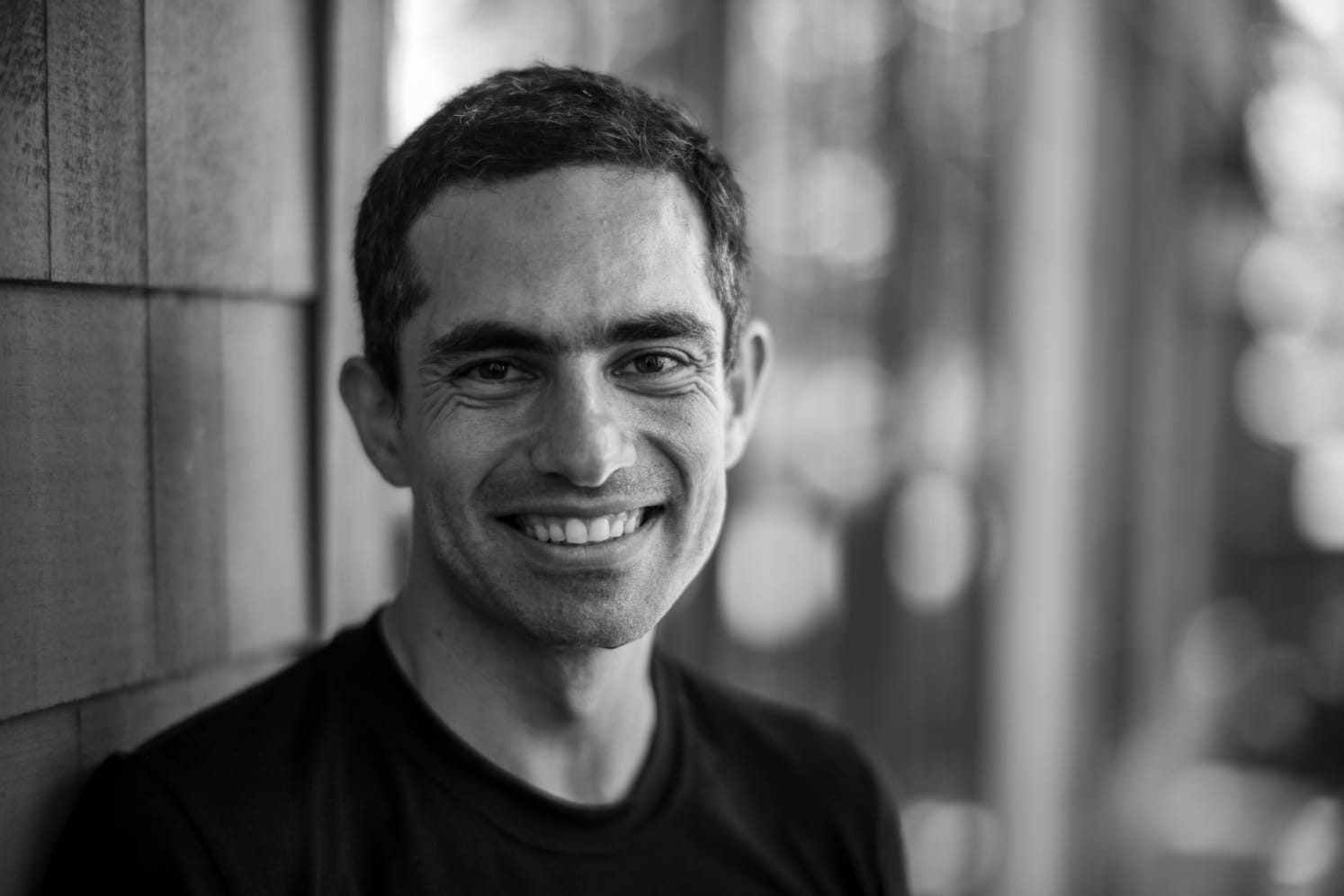
Saint Louis, MO, USA — April 2nd, 2020 — Fabricatorz Foundation, Creative Commons, and the Mozilla Foundation have awarded the prestigious Bassel Khartabil Fellowship to Dr. Tarek Loubani, Medical Director for Glia. The Glia project makes equal care possible through Open Access manufacturing and distribution of key medical supplies, desperately needed in the global fight against COVID-19. Further details on the Fellowship and Glia are available at BasselKhartabil.org.
April 02, 2020Bassel Khartabil Day 2020 Join Us Live on Instagram
Join us on Sunday, March 15, 2020 for the first #basselday. This is the first activity being held. Expect more updates on our social and here at basselkhartabil.org up until and during our moment of active celebration of Bassel.
Join us live on our Instagram account for 1 hour from:
- 1 PM St. Louis Time
- 6 PM GMT/UTC London UK Time
- 11 AM San Francisco Time
- 8 PM Beirut Time
- Find time here
Join US
March 10, 2020Bassel Khartabil Fellowship 2019 Proposals Being Reviewed
Thank you for all the submissions to the Bassel Khartabil Fellowship 2019.
We are currently reveiwing the proposals and will post an update shortly.
October 01, 2019Bassel Khartabil Fellowship Opens 2019 Call for Proposals with Mozilla Foundation and Creative Commons
Individuals and Teams Eligible for 1 Year 50,000 USD Fellowship
PRESS RELEASE - FOR IMMEDIATE RELEASE
Saint Louis — September 3rd, 2019 — Today Fabricatorz Foundation is pleased to invite applications to the second annual Bassel Khartabil Fellowship, honoring the legacy of beloved artist, open source technology innovator, and free culture advocate Bassel Khartabil. This prestigious fellowship supports outstanding individuals or teams developing free culture in their communities under adverse circumstances with financial stability and mentorship. The Fellowship is organized by Fabricatorz Foundation with support from Mozilla Foundation and Creative Commons, along with partnership from Khartabil’s final projects: Nophotozone and #NEWPALMYRA. Full Fellowship details and a submission form are available at BasselKhartabil.org.
August 20, 2019Berlin Artists, Coders & Friends of Bassel, Join Majd's Palestine Mapmaking Saturday
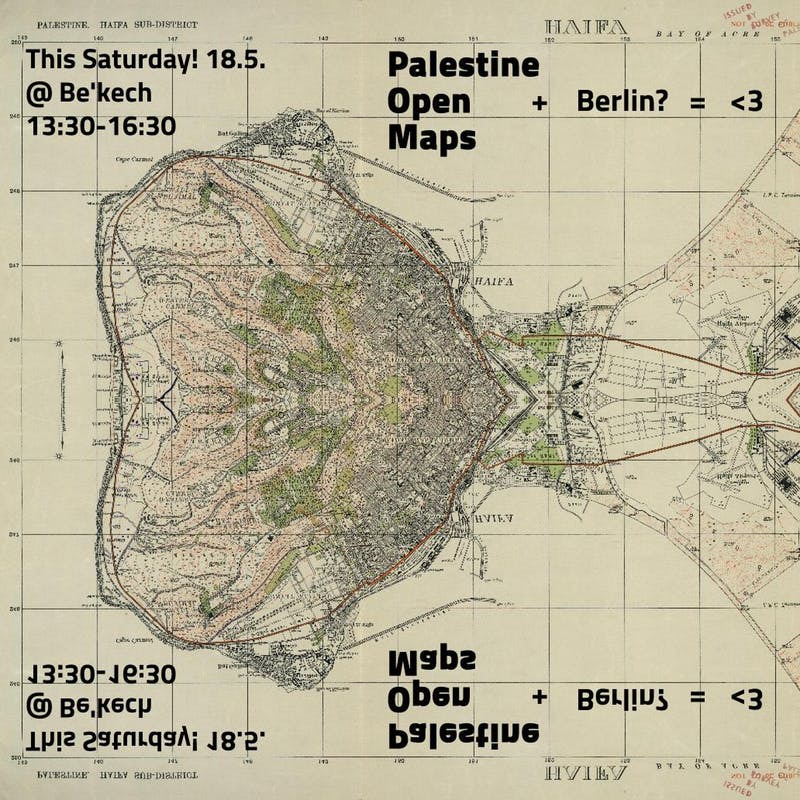
Bassel Khartabil fellow Majd Al-shihabi is holding a Palestine Open Maps Mapathon in Berlin on Saturday, May 18 from 1:30 pm until 4:30 pm CET at bekech Anti-Cafe.
May 17, 2019Bassel Khartabil Timeline Open For Submissions
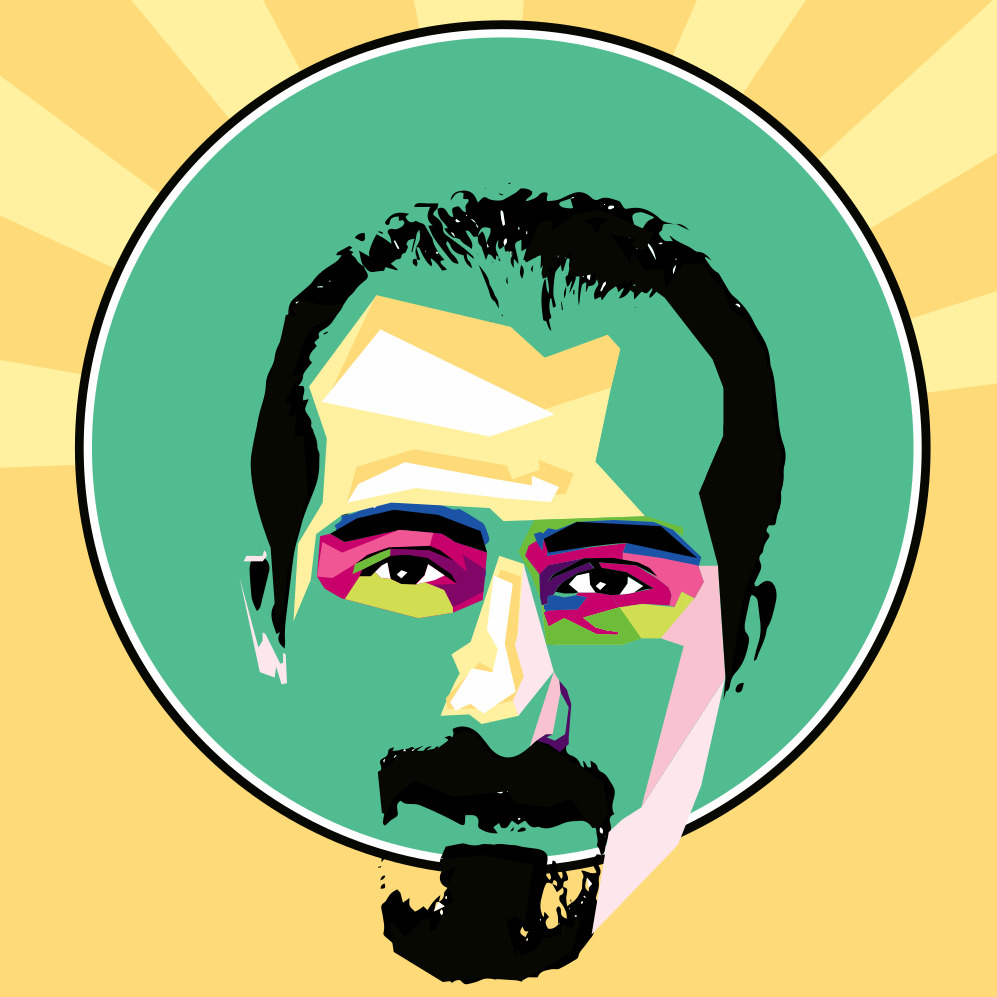
The Bassel Khartabil Timeline is now open for submissions.
May 13, 20197 Ways to Support Majd Al-shihabi
Majd Al-shihabi is the 1st Bassel Khartabil Fellow. He has produced much work in his one year tenure. Here are 7 ways to support him moving forward.
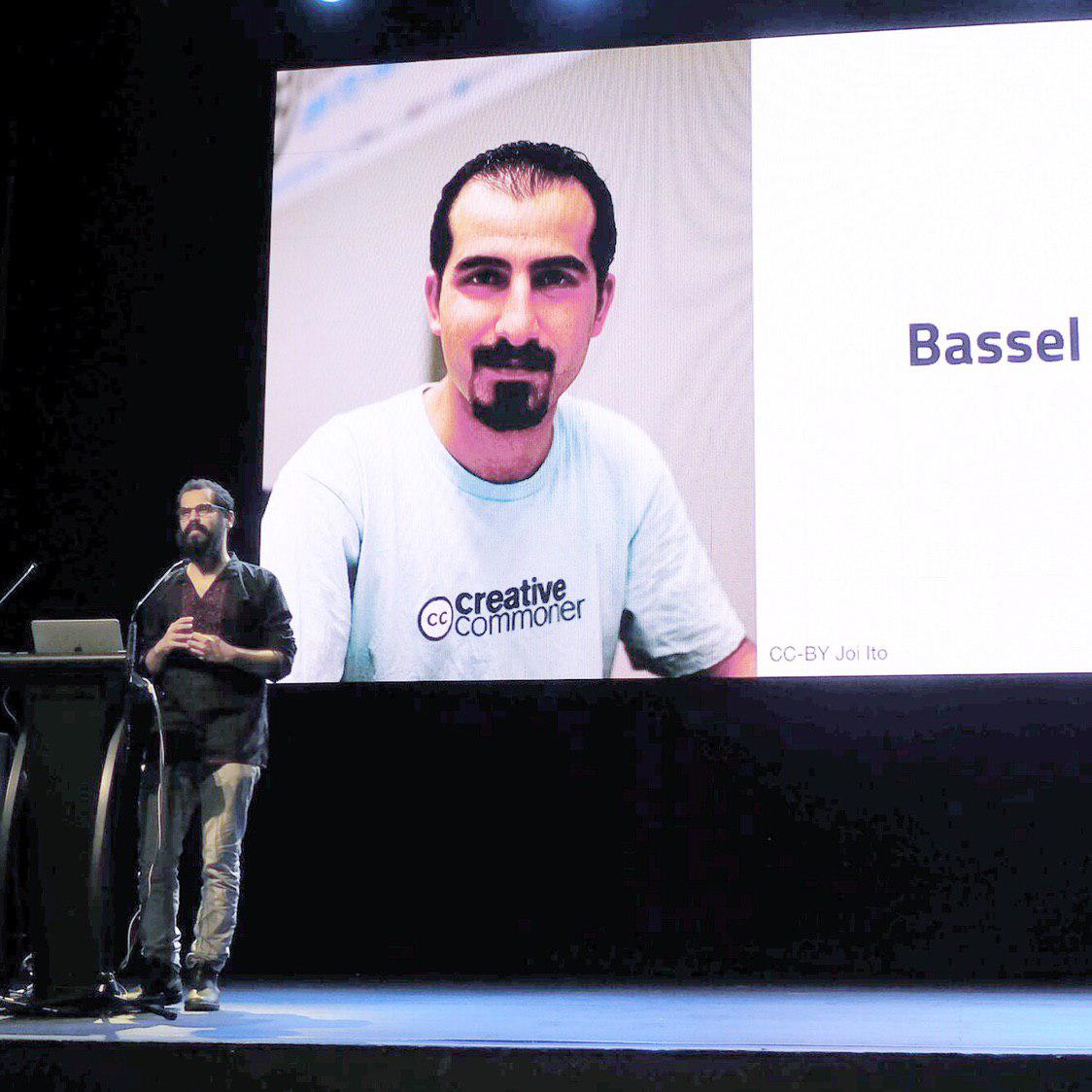
1. Share Your Feedback on Majd and Mahmoud’s presentation at Creative Commons Summit.
- Decolonisation, architecture and bureaucracy of open archives
- Creative Commons Summit on May 11 from 3:30 pm - 4:45 Lisbon Time
- Use Social Media with tags: @majdal #ccsummit @basselkhartabil
- Fill out the Session Notes
Bassel Khartabil Fellowship Partners with Noura Ghazi's Nophotozone
The Bassel Khartabil Fellowship Supports International Human Rights Lawyer Noura Ghazi’s Launch of “Nophotozone” Organization to Support Detainees Forcibly Disappeared in Syria, like Bassel Khartabil

PRESS RELEASE - FOR IMMEDIATE RELEASE.
Saint Louis/Damascus — March 21, 2019 — Today the Bassel Khartabil Fellowship announced its partnership with International Human Rights lawyer Noura Ghazi’s Nophotozone organization. Nophotozone supports forcibly disappeared Syrians, and their families, through legal assistance, empowerment, and advocacy. Nophotozone was an idea originated by Ghazi together with her late husband, Bassel Khartabil, the Syrian-Palestinian technology innovator and activist who opened the Internet for the Arab world who was also a victim of unlawful Syrian disappearance.
March 20, 2019The first Bassel Khartabil Fellowship Awarded to Majd Al-shihabi
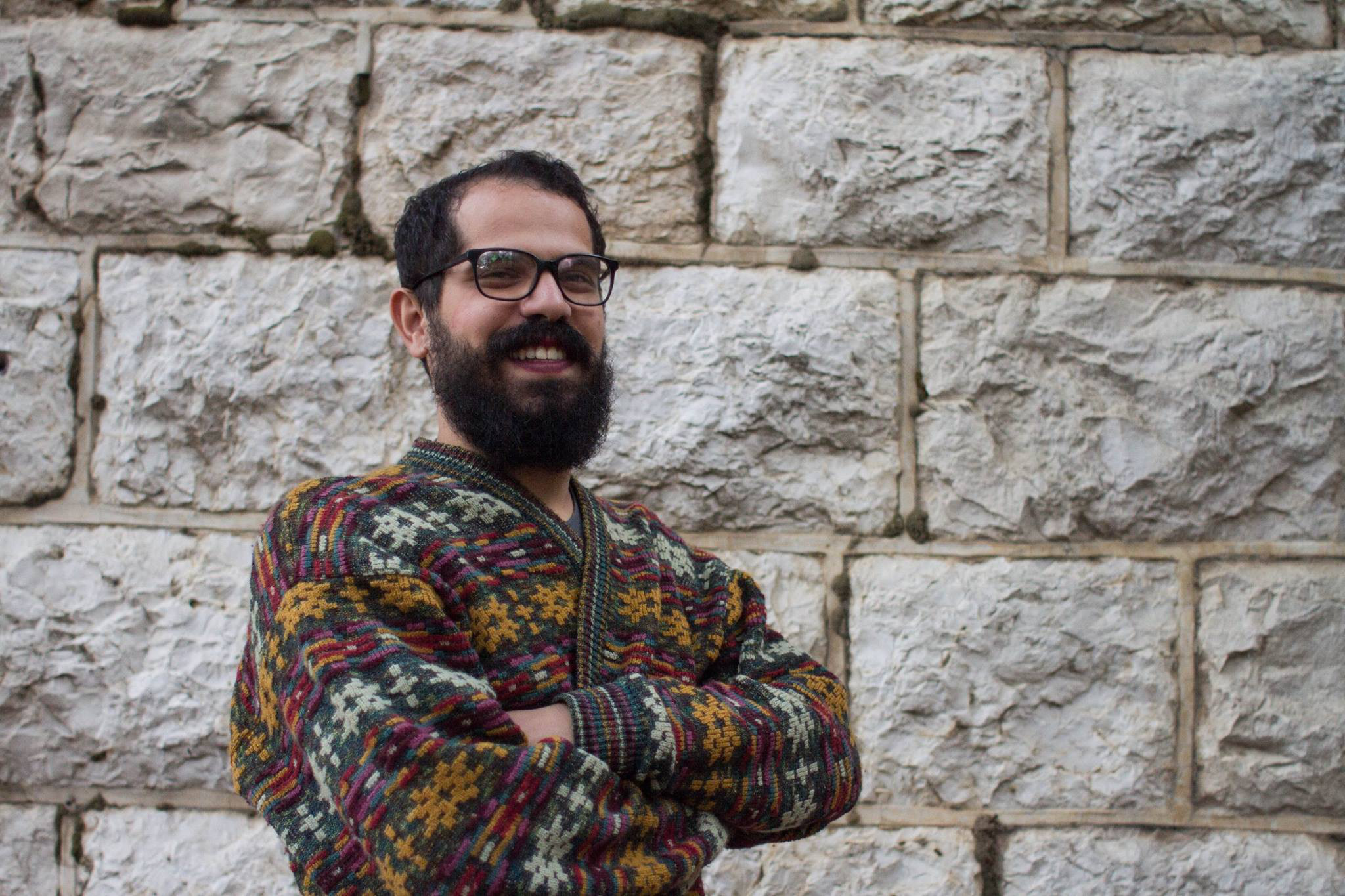
photo CC-BY Ziad Tareq Hassan
The inaugural Bassel Khartabil Fellowship was awarded today to Majd Al-shihabi, a Palestinian-Syrian engineer and urban planning graduate based in Beirut, Lebanon.
April 15, 2018